



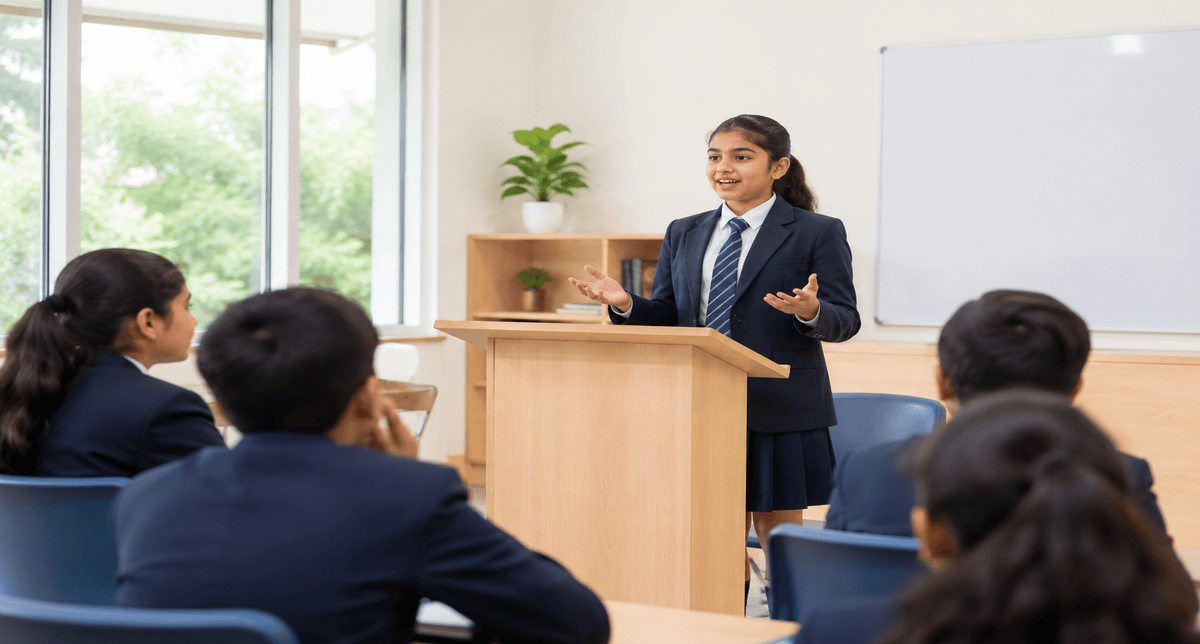
Why Public Speaking Skills Matter for Student Development and Leadership
In today’s fast changing world, academic knowledge alone is no longer enough for success. Students also need public speaking skills, communication skills, leadership abilities, presentation skills, and soft skills to thrive in higher education and future careers. The ability to express ideas confidently, influence others, and communicate effectively has become one of the most valuable life skills.
At Ayana International School, students are encouraged to become confident communicators and responsible leaders through a holistic learning approach. Along with academic excellence, the school focuses on developing essential life skills that prepare students for real-world challenges. Public speaking is one of the most powerful tools that helps students grow into confident individuals capable of leading with purpose.
This article explores how public speaking builds future leaders, why it is an essential part of student development, and how schools can help children develop these lifelong skills.
Why Are Public Speaking Skills Important for Students?
Public speaking is much more than standing on a stage and delivering a speech. It is the ability to communicate ideas clearly, inspire others, and express thoughts with confidence. Students who regularly practice public speaking become better communicators in classrooms, social settings, and future workplaces.
Strong public speaking skills help students:
- Speak confidently before an audience
- Organize thoughts logically
- Improve vocabulary and language skills
- Develop critical thinking
- Express opinions respectfully
- Build self-confidence
These skills benefit students not only during school but throughout their personal and professional lives.
How Does Public Speaking Build Leadership?
Leadership is about inspiring, guiding, and influencing others. Every great leader communicates effectively. Whether leading a classroom project, participating in student councils, or presenting innovative ideas, communication is at the heart of leadership. Students who practice public speaking gradually develop the confidence needed to lead teams and make decisions.
Some important leadership qualities gained through public speaking include:
- Confidence in decision-making
- Responsibility
- Emotional intelligence
- Problem-solving ability
- Positive influence
- Active listening
- Team collaboration
These qualities prepare students to become capable leaders in school and beyond.
Why Are Communication Skills Essential for Future Success?
One of the biggest advantages of learning public speaking is the improvement of communication skills. Students learn how to speak clearly, listen actively, and understand different perspectives.
Good communication helps students:
- Participate actively in classroom discussions
- Build stronger friendships
- Communicate ideas effectively
- Resolve conflicts peacefully
- Perform better during interviews
- Collaborate successfully in group projects
Strong communication creates confidence that stays with students throughout life.
How Do Presentation Skills Improve Student Confidence?
Many students initially feel nervous about speaking in front of classmates. With consistent practice, those fears gradually disappear.
Developing presentation skills teaches students how to:
- Structure information clearly
- Maintain eye contact
- Use body language effectively
- Speak with confidence
- Handle audience questions
- Deliver engaging presentations
Each successful presentation strengthens self-belief, making students more comfortable expressing themselves in any environment.
Can Public Speaking Improve Academic Performance?
Yes. Public speaking contributes directly to better academic performance. Students who actively communicate in classrooms tend to understand concepts more deeply because they regularly organize and explain their ideas.
Public speaking encourages students to:
- Think critically
- Analyze information
- Research topics thoroughly
- Improve reading habits
- Expand vocabulary
- Write more effectively
These skills naturally support better learning outcomes across different subjects.
What Are the Qualities of a Good Leader?
Every successful leader possesses certain qualities that inspire confidence and trust. Schools play an important role in helping students develop these characteristics from an early age.
Some important qualities of a good leader include:
- Confidence
- Integrity
- Responsibility
- Respect for others
- Effective communication
- Decision-making ability
- Empathy
- Creativity
- Accountability
- Adaptability
Public speaking provides regular opportunities for students to practice these qualities in real life situations.
How Do Soft Skills Support Student Development?
Academic excellence opens doors, but soft skills determine long-term success. Employers and universities increasingly value students who demonstrate communication, teamwork, leadership, and adaptability.
Public speaking naturally develops several important soft skills, including:
- Time management
- Critical thinking
- Teamwork
- Creativity
- Leadership
- Confidence
- Emotional intelligence
- Problem-solving
- Adaptability
These skills help students perform well in both academic and professional environments.
How Can Schools Encourage Public Speaking?
Schools create the ideal environment for students to become confident speakers. The more opportunities students receive, the more comfortable they become with expressing themselves.
Effective public speaking activities include:
- Morning assemblies
- Classroom presentations
- Storytelling sessions
- Group discussions
- Debate competitions
- Speech competitions
- Role-playing activities
- Model United Nations (MUN)
- Drama and theatre
- Student leadership programs
Regular participation allows students to overcome stage fear while developing communication and leadership skills naturally.
Why Should Children Learn Public Speaking at an Early Age?
Early childhood is the best time to build confidence. Children who begin public speaking activities at a young age become more comfortable expressing ideas as they grow older.
Learning early helps students:
- Reduce fear of public speaking
- Improve pronunciation
- Build confidence
- Strengthen language skills
- Develop curiosity
- Enhance creativity
- Improve listening abilities
As students progress through school, these advantages become even more valuable.
How Does Public Speaking Prepare Students for Future Careers?
Almost every profession requires effective communication. Whether students dream of becoming doctors, engineers, entrepreneurs, teachers, lawyers, scientists, or business leaders, public speaking provides a strong foundation.
Professionals regularly need to:
- Present ideas
- Attend meetings
- Lead teams
- Negotiate with clients
- Deliver presentations
- Solve workplace challenges
- Build professional relationships
Students who develop these skills early enjoy greater confidence and career readiness.
How Can Parents Help Children Improve Public Speaking Skills?
Parents play an important role alongside schools in developing confident communicators.
Simple activities at home include:
- Encouraging daily conversations
- Reading books aloud
- Asking open-ended questions
- Practicing storytelling
- Playing presentation games
- Watching educational speeches together
- Appreciating every speaking effort
Positive encouragement builds confidence much faster than criticism.
Why Does Confidence Matter More Than Perfection?
Many students believe they must speak perfectly before participating in public speaking activities. In reality, confidence grows through consistent practice, not perfection. Every speech, classroom discussion, and presentation becomes an opportunity to improve. Mistakes help students learn resilience, adaptability, and self-confidence, which are all characteristics of successful leaders. The goal is not to create perfect speakers but confident communicators who are willing to share ideas and learn from every experience.
How Does Ayana International School Develop Future Leaders?
At Ayana International School, education extends beyond textbooks. The school believes that leadership begins with confidence, communication, and character development.
Students receive opportunities to strengthen public speaking skills, presentation skills, and communication skills through interactive classroom learning, collaborative activities, presentations, leadership opportunities, debates, and extracurricular programs. By nurturing curiosity, creativity, teamwork, and confidence, Ayana International School prepares students to become responsible individuals who can communicate effectively and lead with integrity in an ever-changing world.
Conclusion
Public speaking is one of the most valuable life skills students can develop. It builds confidence, strengthens communication skills, improves presentation skills, nurtures leadership, and supports overall student development. These abilities prepare children not only for academic success but also for lifelong personal and professional achievements.
At Ayana International School, every child is encouraged to find their voice, express ideas confidently, and develop the qualities of a good leader. Through holistic education and meaningful learning experiences, the school empowers students to become confident communicators and future leaders who are ready to make a positive impact on the world.
Frequently Asked Questions
1. Why are public speaking skills important for students?
Public speaking skills help students build confidence, improve communication, enhance critical thinking, and prepare them for academic and professional success.
2. How does public speaking improve leadership skills?
Public speaking teaches students to communicate clearly, inspire others, make confident decisions, and lead teams effectively.
3. What are the qualities of a good leader?
A good leader demonstrates confidence, integrity, empathy, responsibility, communication skills, problem-solving ability, and adaptability.
4. How can students overcome the fear of public speaking?
Regular practice, classroom presentations, storytelling, debate activities, and positive encouragement help students gradually overcome stage fear.
5. Why are communication skills important in school?
Communication skills improve classroom participation, teamwork, academic performance, and relationship-building while preparing students for future careers.
6. How does Ayana International School encourage student leadership?
Ayana International School provides opportunities through presentations, debates, collaborative projects, leadership programs, extracurricular activities, and interactive learning that help students develop confidence and leadership abilities.