



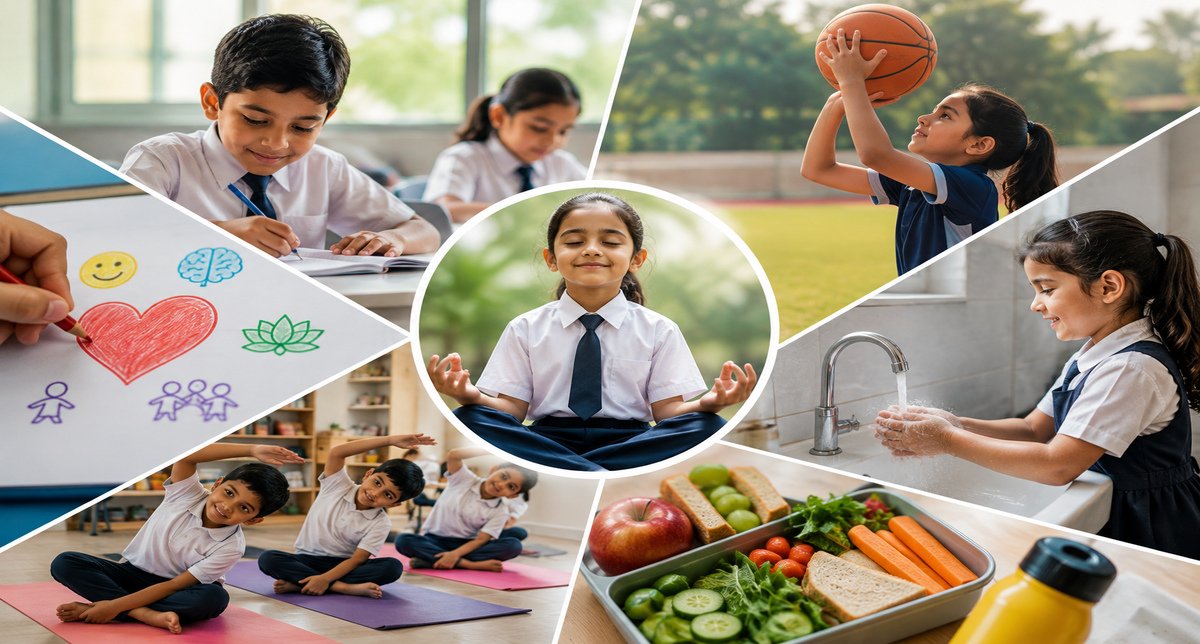
Integrating Wellness into the Daily School Routine: Building Healthier and Happier Students
A child’s school experience is about much more than academics. The daily school routine can also shape healthy habits, emotional balance, social skills, physical activity, and a child’s overall sense of well-being. When wellness becomes a natural part of everyday learning rather than an occasional activity, children get regular opportunities to care for their bodies, understand their emotions, build relationships, and develop healthy habits.
At Ayana International School, integrating wellness into the daily school routine can help create an environment where students feel supported while developing the skills they need for life beyond the classroom. This approach aligns with the broader concept of a health-promoting school, where learning, physical health, emotional well-being, relationships, nutrition, and the school environment work together. The World Health Organization (WHO) also emphasizes that schools can play an important role in promoting health and well-being alongside education.
Rather than adding another demanding subject to the timetable, school wellness activities can be incorporated into routines that already exist.
What does wellness mean in school?
School wellness refers to supporting the physical, mental, emotional, and social well-being of students throughout their school experience. A healthy school environment does not simply encourage children to exercise or eat nutritious food. It also gives them opportunities to relax, communicate their feelings, build positive relationships, solve problems, and feel safe and respected. This makes student well-being in schools a continuous process rather than a once-a-week programme.
A wellness-focused school may incorporate:
- Physical activity and movement
- Healthy eating and hydration
- Emotional awareness
- Mindfulness and relaxation
- Positive peer relationships
- Adequate breaks
- Outdoor learning and play
- Personal hygiene
- Supportive teacher-student relationships
How can wellness become part of the school day?
Wellness does not need to take up an entire period. Small, consistent practices can make a meaningful difference. For example, the school day can begin with a few minutes of calm breathing, stretching, or a simple classroom check-in. Short movement breaks can be included between lessons, while outdoor activities can provide opportunities for physical activity and fresh air.
Teachers can also integrate wellness into regular lessons. A science class can explore nutrition or the human body, while language activities can encourage students to express emotions through stories, discussions, or creative writing. This approach makes wellness in education feel natural instead of separate from academic learning.
Why are movement breaks important?
Children are not designed to remain seated and focused for long periods without movement. Short activity breaks can help change the pace of the school day and give students an opportunity to move, stretch, or refresh their attention.
A movement break could be as simple as:
- Stretching beside the desk
- A short classroom movement activity
- Walking outdoors
- A few minutes of dancing
- Simple balance or coordination exercises
- Outdoor games
Physical activity can also become part of experiential learning. Instead of limiting movement to physical education classes, teachers can use outdoor spaces for observation activities, group challenges, nature walks, or learning games.
How can schools support emotional wellness?
Academic pressure, friendship issues, changes in routine, and everyday challenges can affect how children feel at school. Supporting emotional wellness for students means creating an environment where children can recognise and communicate their emotions without feeling embarrassed or judged.
A simple morning check-in can be useful. Teachers might ask students how they are feeling or give them an opportunity to quietly identify their mood. This does not require a lengthy discussion every morning. Classroom conversations can also help children learn that emotions are normal and that asking for help is a positive behaviour.
Storytelling, role-play, art, journaling, and group discussions are other age-appropriate ways to develop social-emotional learning in schools. The objective is not to make teachers counsellors. Instead, it is to create everyday opportunities for children to develop emotional vocabulary, self-awareness, empathy, and healthy communication.
Can mindfulness fit into the school routine?
A few quiet minutes before an important lesson can help students transition from one activity to another. Children can focus on their breathing, listen carefully to surrounding sounds, or simply sit quietly for a short period. Mindfulness should not feel like another compulsory academic task. It can be introduced as a simple opportunity to pause and reset.
For younger children, teachers can make it playful. Asking students to notice five things they can see, hear, or feel can turn awareness into an engaging classroom activity.
How can nutrition become part of wellness?
Healthy eating habits are another important part of student wellness programmes. Schools can encourage children to understand why balanced nutrition, regular meals, and hydration matter. Nutrition education can be integrated into classroom learning rather than restricted to occasional awareness days.
Students can learn about:
- Different food groups
- The importance of drinking water
- Seasonal fruits and vegetables
- Balanced meals
- Healthy eating habits
- Food hygiene
Teachers can use simple examples from students’ everyday lives. Discussions about lunch boxes, ingredients, or local foods can make nutrition education more relatable. Schools can also encourage children to drink water regularly and provide appropriate opportunities for hydration during the school day.
Why are outdoor activities important?
Outdoor learning can support both physical and emotional wellness. A change from the classroom environment can give children opportunities to move, explore, observe, collaborate, and interact with nature. An outdoor lesson could involve observing plants, measuring objects, collecting information, sketching, storytelling, or completing a group challenge.
This connects outdoor learning and student wellness with academic development rather than treating outdoor time simply as a break. Outdoor activities can also encourage curiosity and reduce the monotony of a classroom-only routine.
How can schools encourage positive relationships?
Wellness is also social. Children need opportunities to develop friendships, cooperate with classmates, resolve disagreements, and feel that they belong. Teachers can encourage collaborative activities where students work toward shared goals instead of always competing individually.
Simple classroom practices can include:
- Pair and group activities
- Peer collaboration
- Team challenges
- Circle discussions
- Cooperative games
- Buddy activities
A positive school culture can help students feel connected to their classmates and teachers. WHO’s health-promoting school framework recognises the importance of a supportive social environment and positive relationships within the school community.
What can teachers do every day?
Teachers are central to creating a healthy classroom routine, but wellness does not have to become an additional burden. Small changes can be incorporated into existing teaching practices. A teacher might begin the day with a short emotional check-in, include movement between lessons, encourage hydration, or end a demanding activity with a quiet transition.
Teachers can also model healthy behaviours themselves. When adults demonstrate respectful communication, balanced routines, appropriate breaks, and positive coping strategies, children have an opportunity to observe these behaviours in practice. The goal is consistency rather than perfection.
How can parents support school wellness?
Wellness becomes more effective when school and home work in the same direction. Parents can reinforce healthy habits by maintaining consistent routines at home. Simple practices such as adequate sleep, nutritious meals, regular physical activity, hydration, limited recreational screen time, and open communication can complement what children experience at school.
Schools can also share age-appropriate wellness suggestions with parents through workshops, newsletters, or parent-teacher interactions. WHO’s approach to health-promoting schools recognises the importance of involving families and communities rather than placing responsibility entirely on the school.
What does a wellness-focused school day look like?
A wellness-focused school day does not need to look dramatically different from a regular school day.
A simple routine could look like this:
Morning: A calm welcome, classroom check-in, and short stretching or breathing activity.
During lessons: Opportunities to change positions, move between activities, collaborate, and participate actively.
Break time: Time for outdoor play, social interaction, hydration, and relaxation.
Learning activities: Lessons that incorporate nutrition, emotional awareness, nature, movement, and healthy decision-making where appropriate.
Afternoon: A short movement or mindfulness break to help students transition between activities.
End of the day: Reflection on learning, achievements, feelings, or positive moments from the day.
The exact routine can vary according to the age group, timetable, school facilities, and individual student needs.
How does wellness support learning?
Wellness and learning should not be treated as competing priorities. A child who feels physically comfortable, emotionally supported, and connected to the school environment may be better positioned to participate in classroom activities.
A systematic review of health-promoting school interventions found evidence of benefits for several student health outcomes, including physical activity, physical fitness, fruit and vegetable intake, and some aspects of bullying. However, outcomes vary by intervention and context, so wellness programmes should be thoughtfully designed rather than treated as a guaranteed academic solution. The larger principle is straightforward: healthy children need healthy environments in which to learn.
What are the long-term benefits of school wellness?
The habits children develop during school years can influence how they approach health and well-being later in life. Regular movement, healthy eating, emotional awareness, positive relationships, personal hygiene, and knowing when to ask for help are valuable life skills.
A school that consistently incorporates these practices can help children understand that wellness is not something to think about only when they are unwell. It is part of everyday life. This is also why wellness education for children should focus on practical habits rather than simply providing information.
Frequently Asked Questions
1. What is wellness in education?
Wellness in education means supporting students’ physical, emotional, mental, and social well-being alongside academic development. It can include movement, healthy nutrition, emotional awareness, positive relationships, mindfulness, and a supportive learning environment.
2. How can schools promote student wellness?
Schools can promote student wellness through regular movement breaks, outdoor activities, healthy food education, hydration, emotional check-ins, mindfulness, positive classroom relationships, safe environments, and age-appropriate health education.
3. Why is student well-being important?
Student well-being is important because children need to feel physically safe, emotionally supported, and socially connected to participate positively in school life. A whole-school approach can address several aspects of health and the learning environment together.
4. What are simple wellness activities for students?
Simple activities include stretching, breathing exercises, outdoor walks, classroom movement games, mindfulness activities, hydration breaks, emotional check-ins, cooperative games, and nature-based learning.
5. How can parents encourage wellness at home?
Parents can support school wellness by encouraging healthy meals, adequate sleep, physical activity, hydration, balanced screen use, emotional communication, and consistent daily routines.